Why Local Health Professionals Still Need Their Own Website
Podiatrists, physiotherapists, osteopaths and similar local practices that rely only on Facebook and leaflets leave patients on the table. Competition is often weak, a simple contact form already beats many rivals, and a booking form lets people arrange appointments when you are busy or closed.
Most towns have only a handful of podiatrists, physiotherapists, osteopaths or similar practices. The ones that appear first when people search online quietly take a large share of the new patients.
Yet many still rely almost entirely on Facebook posts, the odd leaflet and word of mouth. Those methods work to a point. They also leave a clear gap that a simple website fills with almost no extra effort.
The competition is weaker than it looks
In a town of thirty or forty thousand people there may be one or two other practices in the same field. Sometimes none. Local search results for “podiatrist near me”, “physio [town name]” or “osteopath near me” are often thin. The first clear, professional listing tends to win a lot of the enquiries.
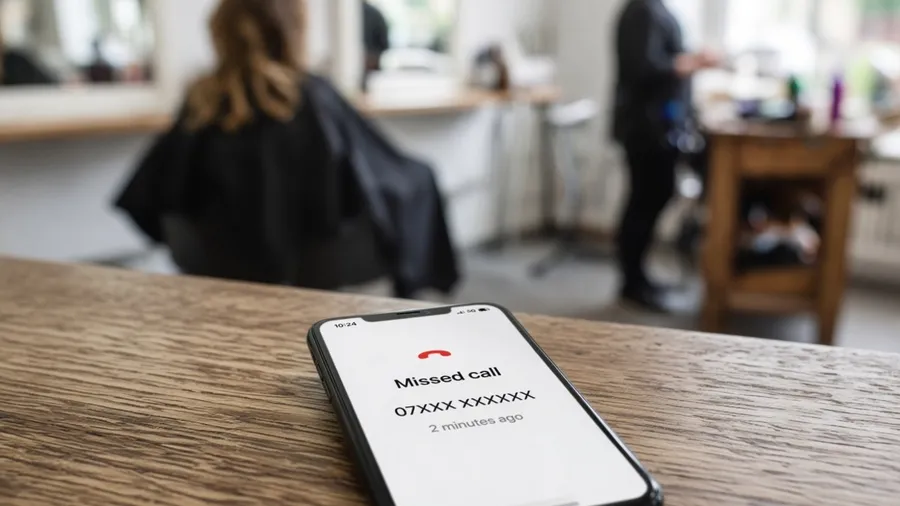
The weakness runs deeper than numbers. Plenty of local practices still do not answer the phone reliably. Messages go to voicemail and stay there. Emails sit unanswered for days. When that happens the patient simply tries the next name on the list. A simple contact form on your own website already puts you ahead of those competitors on day one. The enquiry arrives, sits waiting, and gets dealt with when you are free. No missed calls. No shared leads. Just a direct message that the other practice never even saw.
Patients still check before they book
Someone is referred by a friend or sees a Facebook recommendation. Before they call, many of them type the name into Google. If the only results are a Facebook page and an old directory listing, some simply move on to the next name that looks more established.
Health services are personal. People want to feel they are dealing with a proper practice. A straightforward one-page site with clear services, a short about section, a couple of photos of the clinic or team, and an easy way to get in touch gives that reassurance before the first conversation starts. It does not need to be complicated. It just needs to exist and look professional.
Not everyone wants to arrange appointments over the phone
Some patients are happy to call. Others are not. They prefer to book in their own time, often in the evening or at the weekend when the clinic is closed. A contact form helps. A booking form goes further.
OnePageSites can include a simple booking form on the website. Patients choose a suitable slot, leave their details and the request comes straight through. They do not have to wait on hold or leave a voicemail. You do not have to stop treating a patient mid-session to answer the phone. The appointment request arrives when it suits them and sits ready for you to confirm when it suits you.
That single feature already separates a practice from many local competitors who still force every enquiry through a ringing phone that often goes unanswered.
Facebook is useful but limited
Facebook is free and familiar. Local groups and boosted posts can bring in work. The problem is that Facebook decides what people see. Algorithms change. Posts disappear down the feed. A page can be limited or restricted without warning. The audience is whoever happens to be scrolling that day, not necessarily the people searching for a physiotherapist or chiropodist right now.
A website sits outside that system. It is there when someone searches at 9pm with a painful knee or when a new resident looks for a local osteopath after moving into the area. The enquiry comes straight to you. No shared lead. No platform taking a cut or changing the rules overnight.
You own the first impression
Directories and social platforms can be useful extras. They should not be the only place patients find you. When the website is on your own domain, every enquiry and every booking request belongs to the practice. The contact form, the booking form, the phone number and the email all point back to something you control.
Patients remember a clear website address more easily than a random Facebook page. When they need the service again six months later, they search the practice name and land on the same page. Over time that builds a steady stream of direct bookings instead of relying on whoever the algorithm decides to show.
The technical barrier is already gone
The biggest reason many local health professionals put it off is the idea that a website means evenings spent learning builders, hosting settings or endless updates. That used to be true. It is not any more.
OnePageSites builds exactly the kind of simple, mobile-friendly site that works for a busy practice. You tell us the services you offer, send a few photos if you have them, and we handle the rest. The result is a clean page that shows what you do, where you are, and how to get in touch or book. No complicated menus. No technical decisions for you.
You can see real examples of the practical sites we create on our Examples page. Many are for trades and other local service businesses that faced the same problem: skilled people who did not want to become web experts. The same approach works just as well for podiatrists, physiotherapists, osteopaths, chiropractors and similar practices.
Low competition makes the advantage larger
In many trades the online space is crowded. In local health and therapy services it often is not. A basic, well-presented website can move the practice to the front of the results faster than most people expect. Combined with a completed Google Business Profile, the site becomes the place patients land when they are ready to book.
It also helps when the practice wants to raise fees or add new treatments. Patients who have already seen a professional online presence are more likely to accept realistic prices. The image matches the quality of care they will receive.
A quiet advantage that works while the clinic is busy
Most enquiries do not arrive at convenient times. Someone’s foot pain flares up after work. A parent finally decides to sort a child’s problem while scrolling their phone. A patient finishes a long shift and wants to book physio for next week. If the only contact method is a mobile that goes to voicemail, many of those people simply call the next practice on the list.
A simple contact form or booking form on the website means they can leave the details or request a slot there and then. The message sits waiting. No shared lead. No extra fee. Just a direct enquiry that arrived while the clinic was full or closed for the day.
Because so many local competitors still leave phones unanswered and emails ignored, the practice that makes it easy already stands out.
Take the step that most local practices still skip
Facebook posts and local advertising still have a place. They do not have to be the whole strategy. A straightforward website puts the practice in front of people who are already searching in the local area, where the number of competitors is often small and the response standards of those competitors are often low.
Look at the Examples of sites already built for practical local businesses. When you want to talk through what would suit a podiatry, physiotherapy, osteopathy or similar practice, Get in Touch. Tell us how patients currently find you and what the next twelve months look like. We will explain the options in plain English, including contact and booking forms, and give you a clear fixed price with no surprises.
The clinical skills already deliver the results patients need. A simple online presence simply makes sure more of the right patients can find the practice and book when they are looking.